How will the idea of decolonisation help the artist find new ways of representation? The answer to this question is connected to the artist’s urge to search for a new discourse and artistic traditions from which modern education has alienated us. ‘Bakmuhurta’ (Turning Moment) is about the desire to create a space beyond modernism’s dominant discourses by way of negotiating some of the historical developments in art through which to arrive at some critical images. It is a space for all of us to navigate issues pertaining to our respective artistic position vis-à-vis the postcolonial condition in the hope of finding ways to ensure the unity of form and content using lines and shapes that are easily attainable in the method of printmaking. If the workshop can initiate a change in our artistic positions and processes only then the title Bakmuhurta would seem relevant in future.
The idea of decolonisation of artistic practice can be traced back to the years of struggle to invent authentic idioms in any colonial society. In Bangladesh its traces are found in the pictorial language of artists S.M. Sultan and Quamrul Hasan. Zainul’s famine paintings bear a strong testimony to the artist’s radical turn that involved a process of unlearning. One can imagine the scene of the decline of the agricultural society in the unfolding scenes of human tragedy on Kolkata streets. Thus the seeds of criticism of urban-centric modernity can be read into these famine sketches. They serve as our primary references to an artist’s response to the colonial condition, thereby enhancing our understanding of decolonisation. This may provide the way for us to enter the artistic process of becoming ‘sarab’(or vocal) as opposed to remaining ‘arab’ (or silent) regarding the continuation of the colonial rule through the maintenance of the global capital order.
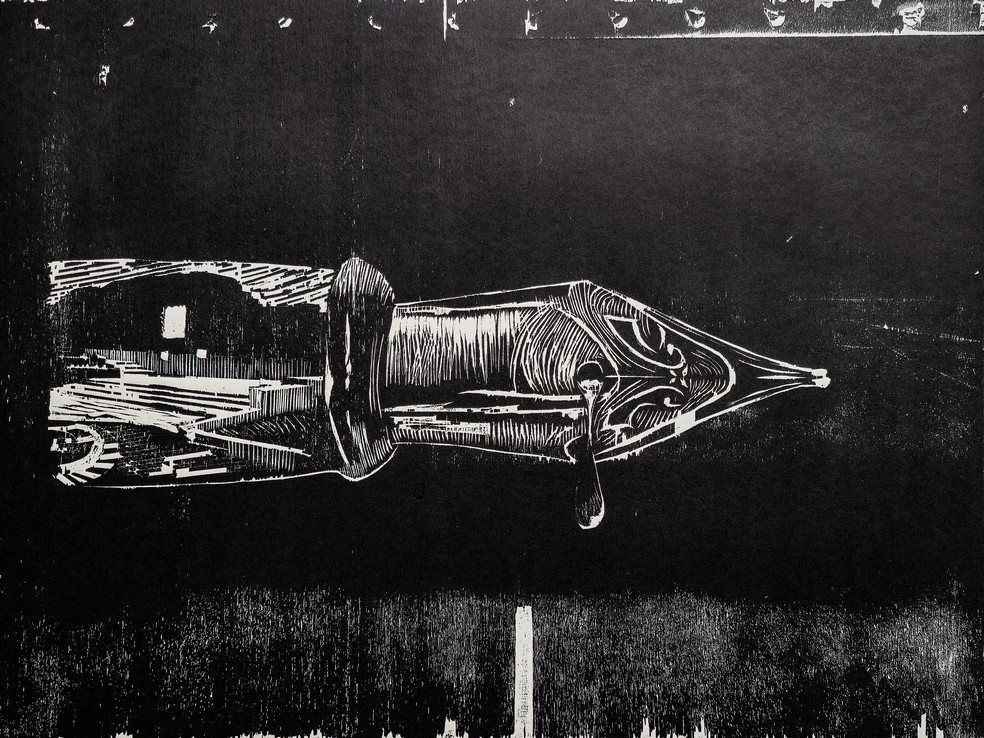
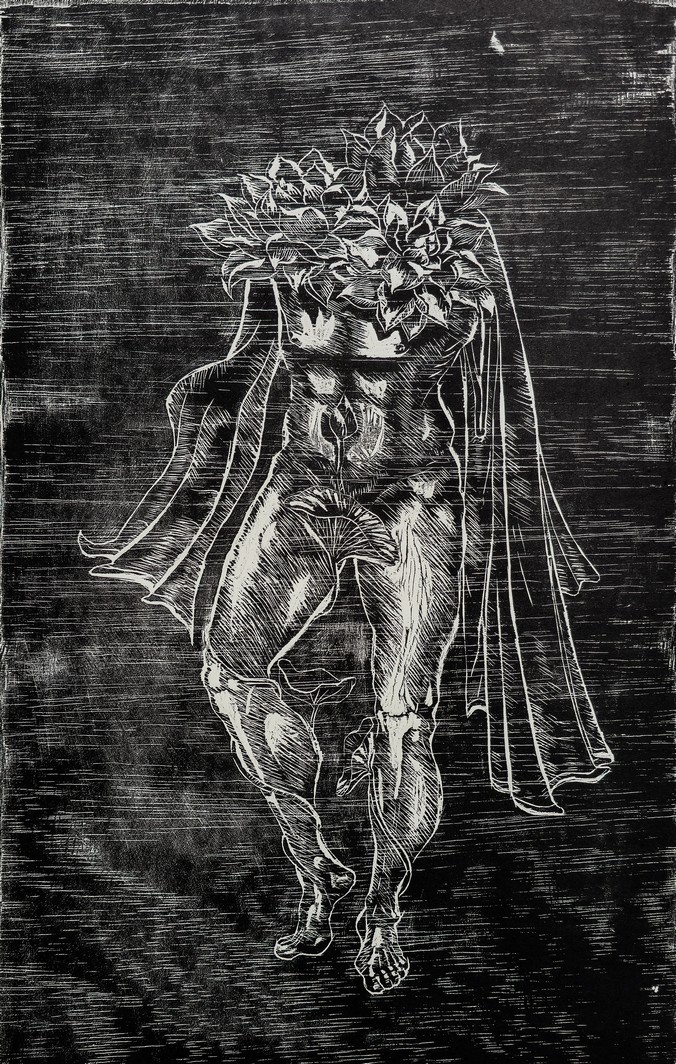
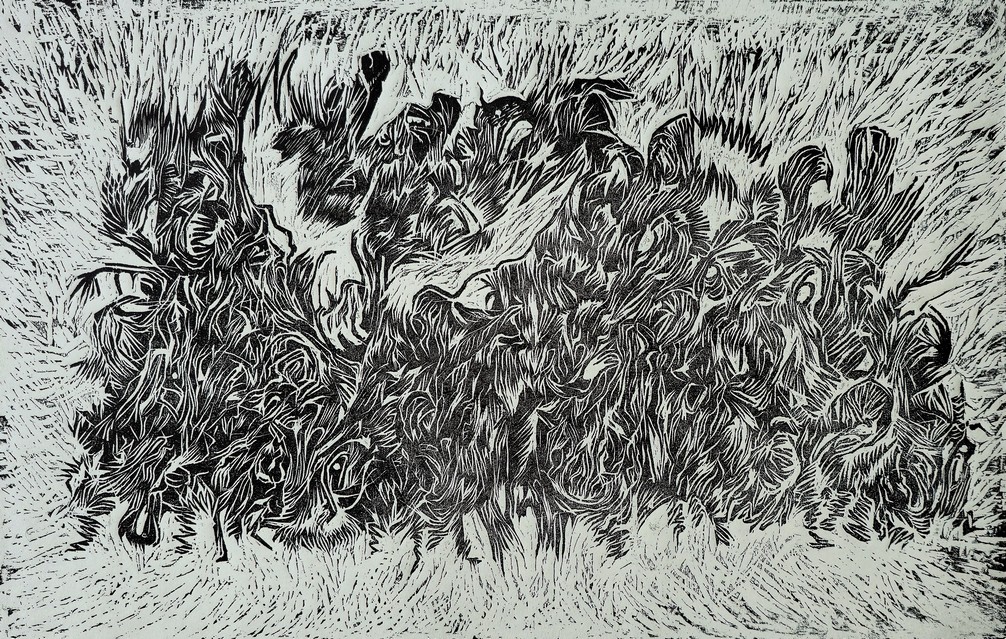
Since printmaking provides a way for the artist to create stark images through woodcut using plyboard, plastic wood, and through monoprint and various other methods of creating prints, we want to sharpen our language, make it more efficacious as we take ‘decolonisation’ as a point of reference. The main procedure in Bakmuhurta thus involves a call to artists to take into account the ‘turning moments’ in the story of art in this region, which, we hope, will set us on a new course.
The question remains – why printmaking? Because we want to cultivate the clarity of artistic expression possible through the processes of printmaking. Bakmuhurta is our attempt to create art together while we use protest imagery in the anticolonial movement as our point of departure. Bankmuhurt is a preparatory workshop for the ‘Decolonial Convergence 2025’.
Decolonial Convergence 2025: ‘Lokayata’ is calling for the Decolonial Convergence. The event has been conceived as a site for exchange and critical expression. We will converge to parse the dominant narratives and to jointly imagine many worlds in one world. The event will include dialogues and informal talks, exhibitions, music as well as eating and drinking together, and also the practice of care and much more.
Artists, farmers, activists, organisers, researchers, and people from different communities in Bangladesh and beyond to come together to reassert their position. These are people engaged in struggles on various levels to ensure gender equality, labour right and food security; protect climate, culture, and agriculture; promote mental health. We are aware that languages, forms of resistance and artistic expression are varied. We want to advance discussions and discourses on and around decoloniality by negotiating the narratives of people with different experiences. Thus the event is also a space for mutual trust and the voicing of concerns over how to dismantle the colonial legacies and readjust our eyes to local realities.
One important goal is to build bridges between different places and different knowledge-opinions-tarikas or paths through in-person and virtual presence. This is not a one-off event; we have conceived this event as a continual process of convergence of critical minds. It is a journey through which participants will gain a grounded, critical and collective understanding of decolonisation. We hope that this journey will raise new questions, build new solidarities and inspire new worldmaking practices. Starting in 2025, Lokayata and Nirikh will strive to organise this conference annually, which will be a growing field of decolonial theory and praxis.